

Blog
Insights on compliance automation.
Guides and articles on automating evidence collection, generating policies from real infrastructure, and getting audit-ready across SOC 2, HIPAA, and ISO 27001.
Why screenshots and workflow recordings are essential for control validation
Screenshots and workflow recordings provide the visual proof required for application-level control validation, the controls that logs and APIs cannot reach. This guide covers which controls need visual evidence, why recordings carry more integrity than static screenshots, and how an AI compliance agent named Vera captures that proof as one signed input inside a broader evidence program.
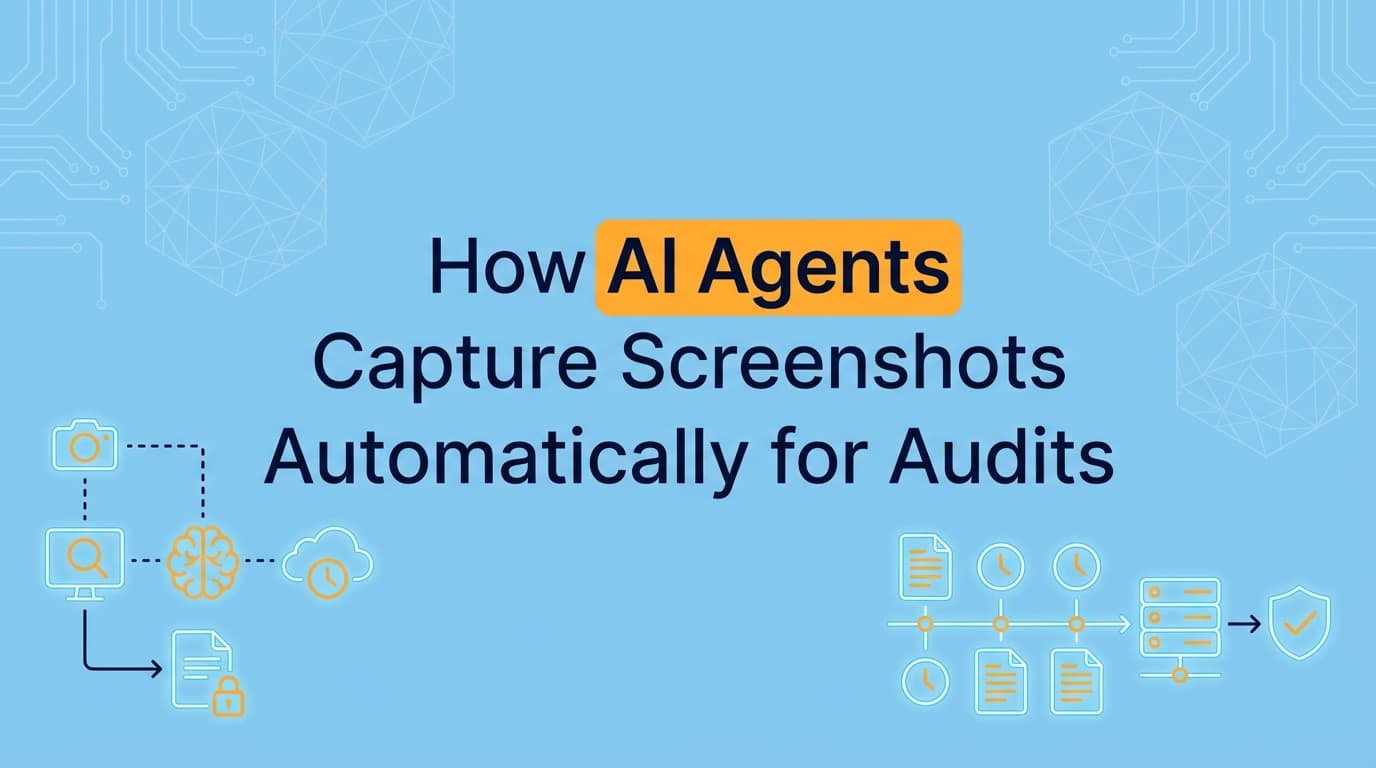
How AI Agents Capture Screenshots Automatically for Audits
An AI compliance agent named Vera captures application screenshots as one of several ways she collects audit evidence. She runs the control test, the browser extension captures each step with a DOM snapshot and signed timestamp, a vision model scores whether the shot proves the control, and every capture is mapped to a Trust Services Criterion and signed. This guide covers how that capture works, where it fits in an agent-run program, and what auditors require to accept it.
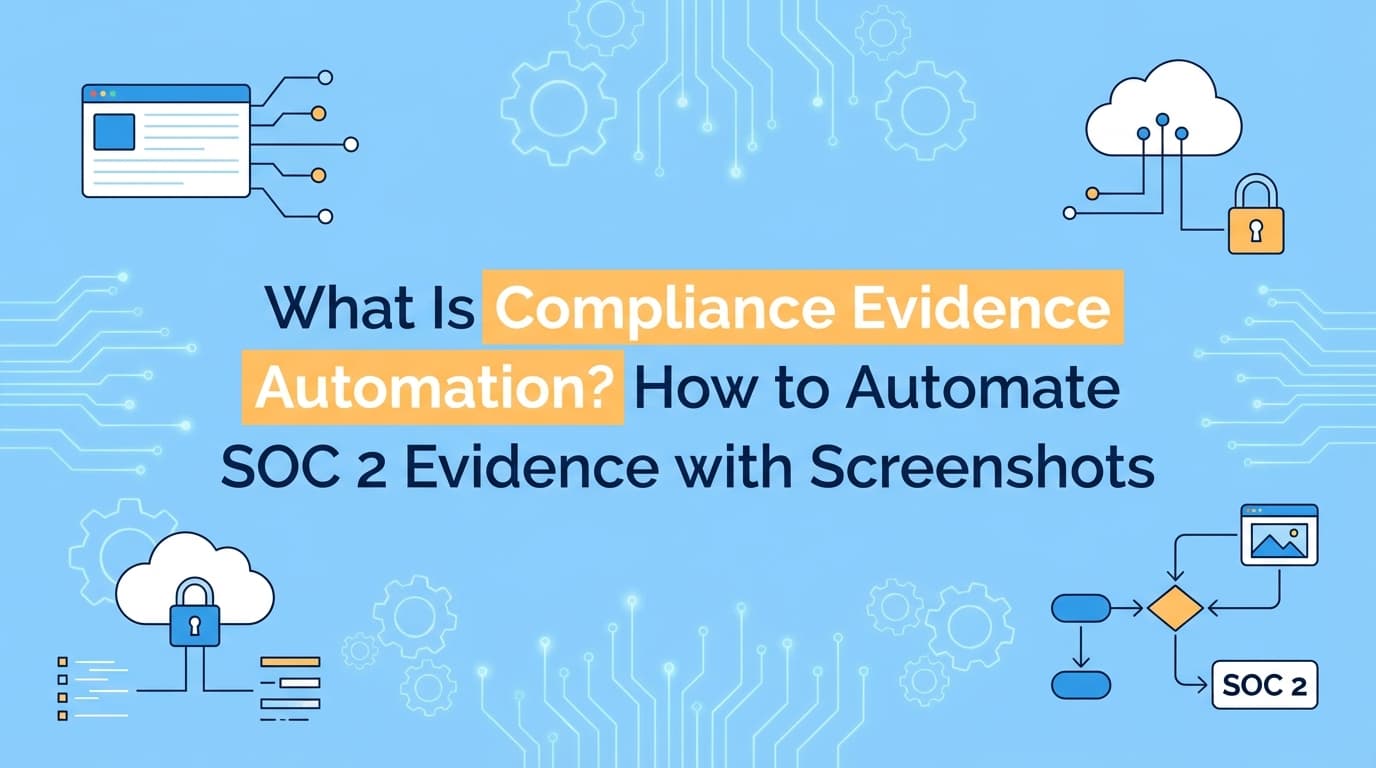
What Is Compliance Evidence Automation? How to Automate SOC 2 Evidence with Screenshots
Compliance evidence automation is an agent that collects, documents, and signs SOC 2 evidence across every source: API scans, application screenshots, and the attestations only a person can answer. Screenata's agent Vera runs it, capturing the UI proof a dashboard can't reach, mapping it to controls, and filing signed, traceable packs.
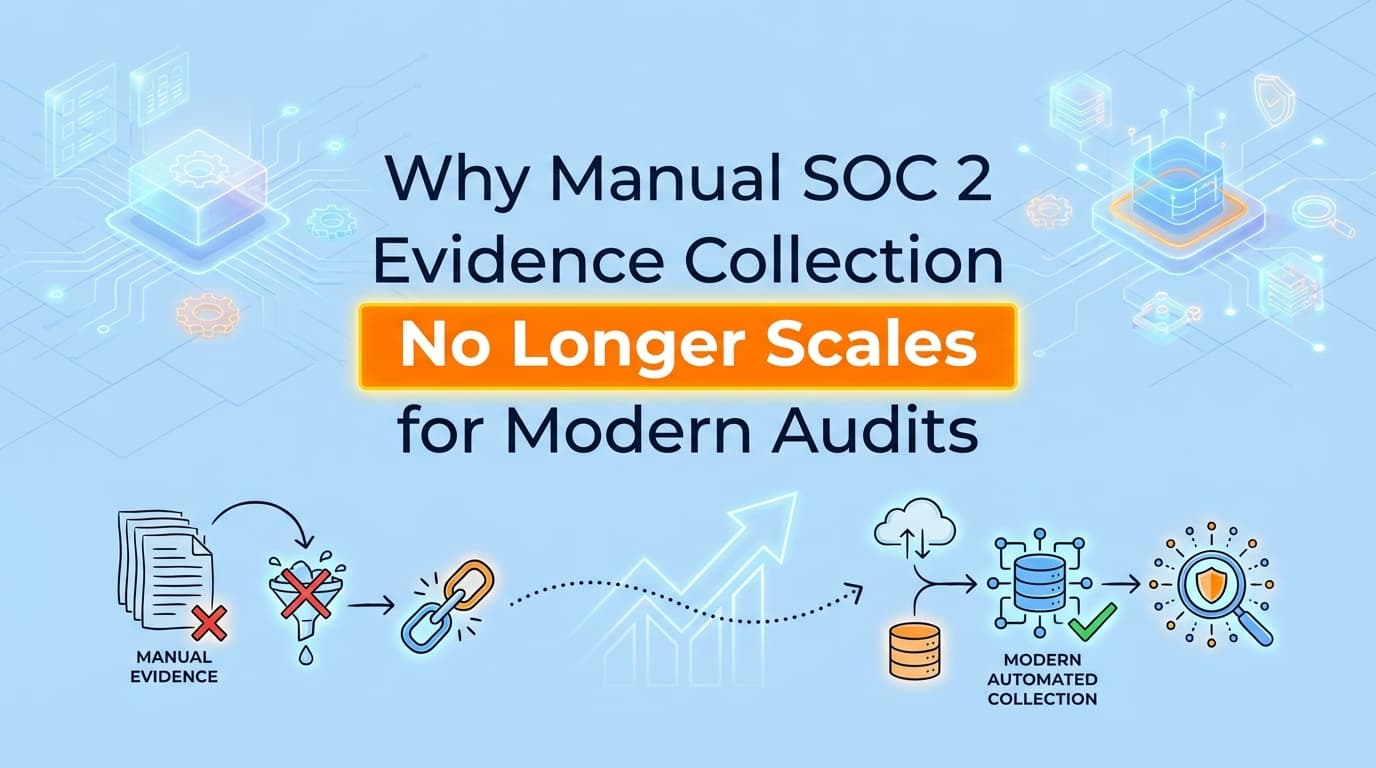
Why Manual SOC 2 Evidence Collection No Longer Scales for Modern Audits
Manual SOC 2 evidence collection takes 40–80 hours per quarter, leading to human error and audit delays. Modern audits require automation to capture screenshots and document application-level controls. This article explains why manual methods fail and how automated evidence collection scales compliance for fast-growing companies.
What makes Screenata a category-defining compliance automation platform
Screenata is an AI Compliance Officer, an agent named Vera who runs continuous compliance. She scans your infrastructure, writes deterministic SOC 2 policies from your real systems, captures the application evidence APIs can't see, chases attestations in Slack, and signs every artifact. A dashboard flags work; Vera does it. She replaces both the GRC platform and the consultant for $22K-$33K in year one to a SOC 2 Type II, with the auditor and your team's time counted.
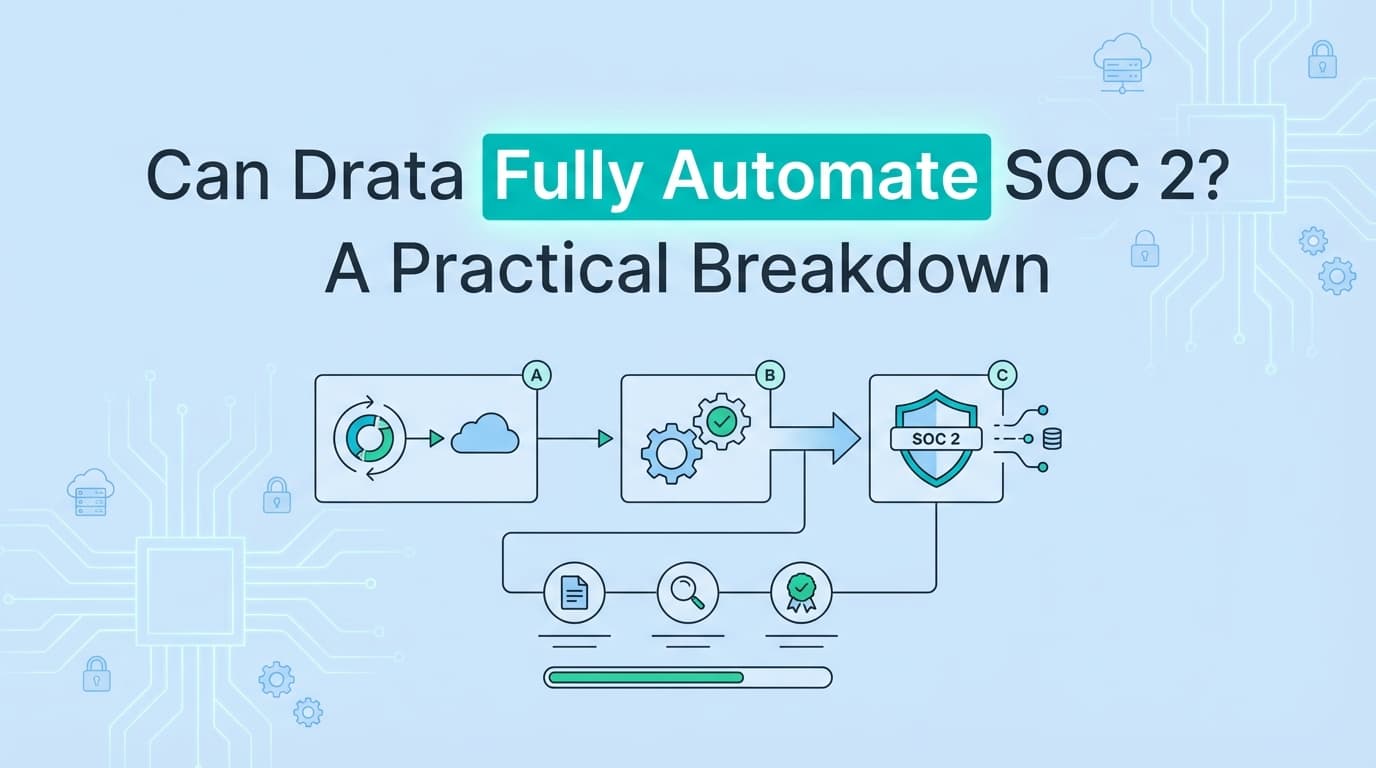
Can Drata Fully Automate SOC 2? What It Covers and What It Misses
Drata connects to AWS, GitHub, and Okta to monitor infrastructure controls. It does not write policies, capture application evidence, chase attestations, or do the work it flags. This breakdown covers exactly what Drata automates, what it leaves on your plate, and how Vera, an agent that runs continuous compliance, closes the gap alongside Drata or in place of the platform-plus-consultant stack.
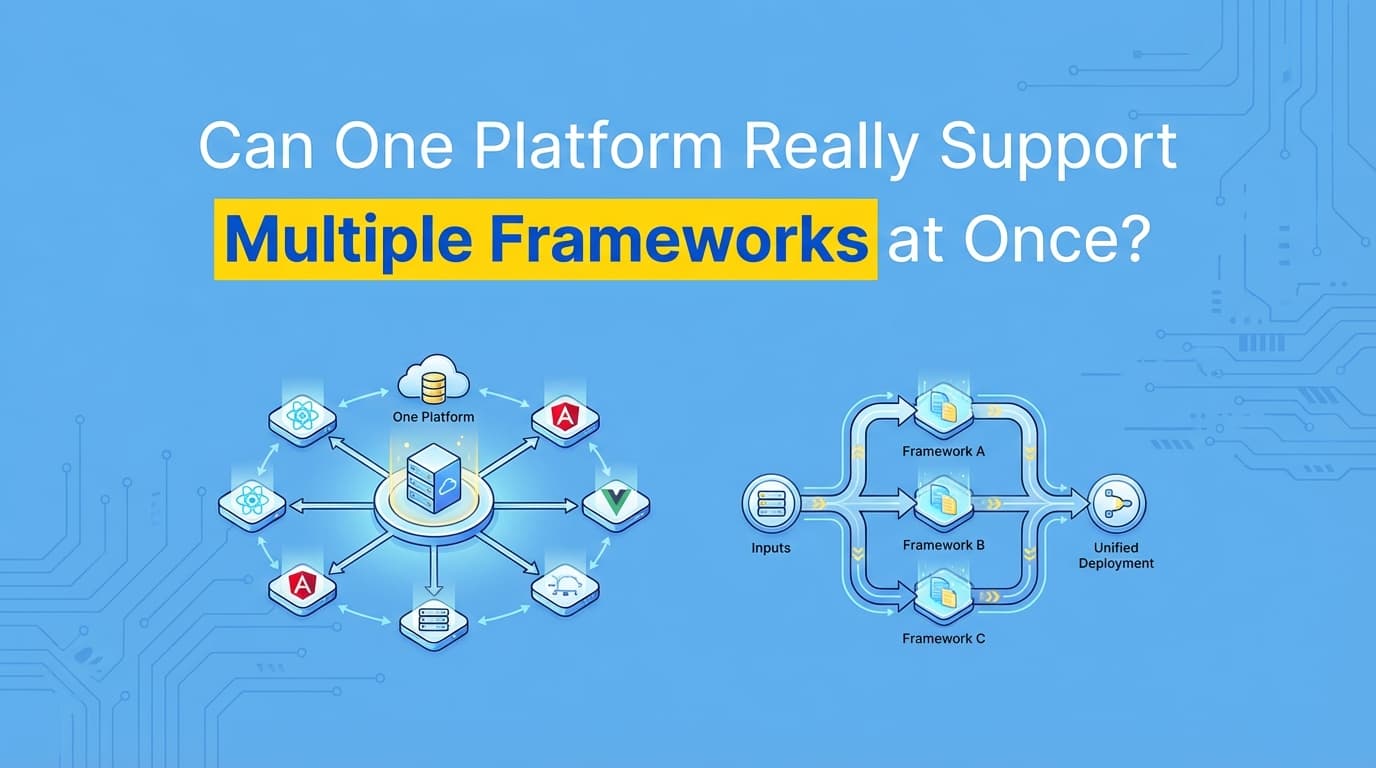
Can One Platform Really Support Multiple Frameworks at Once?
Yes. Modern compliance automation platforms like Screenata use cross-framework mapping to satisfy SOC 2, ISO 27001, HIPAA, and CMMC requirements simultaneously. By capturing evidence once and mapping it to multiple control IDs, organizations reduce manual audit workloads by up to 80% and eliminate redundant testing.
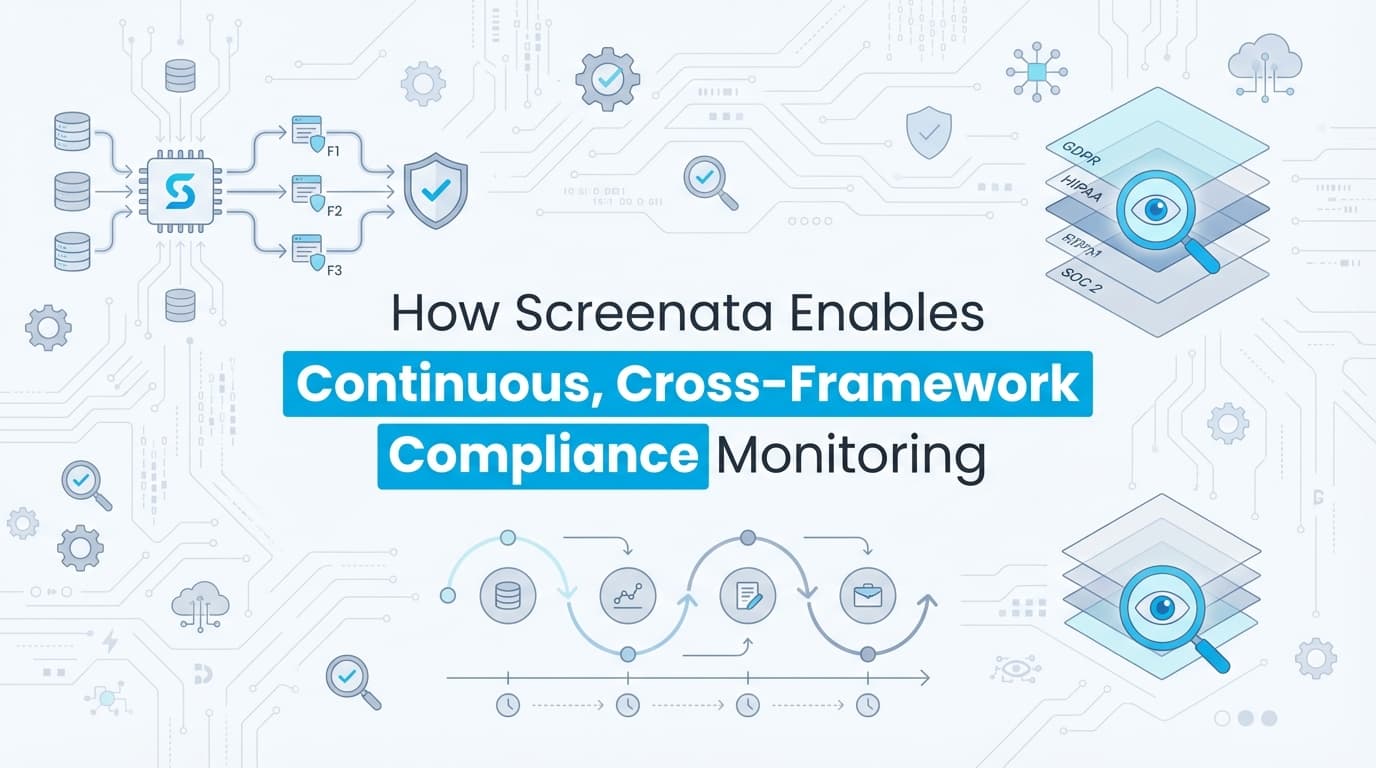
How Screenata Enables Continuous, Cross-Framework Compliance Monitoring
Screenata enables continuous, cross-framework compliance by acting as your AI Compliance Officer, writing policies, analyzing your codebase, mapping controls, collecting evidence, and tracking readiness across SOC 2, ISO 27001, HIPAA, and more. This approach eliminates redundant manual testing, ensures real-time audit readiness, and reduces documentation effort by over 90%.
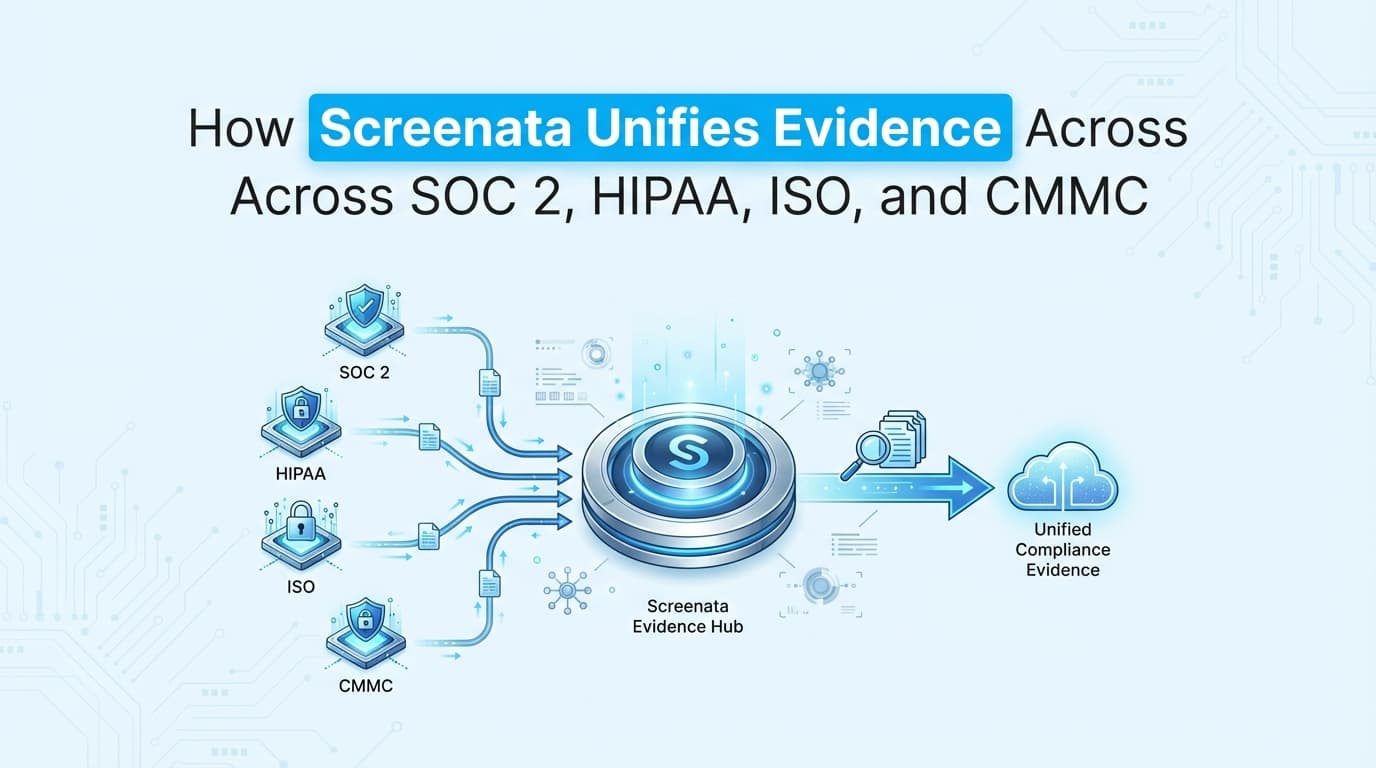
How Screenata Unifies Evidence Across SOC 2, HIPAA, ISO, and CMMC
Screenata unifies compliance evidence by capturing application-level workflows once and mapping them to multiple frameworks simultaneously. This eliminates redundant documentation for SOC 2, HIPAA, ISO 27001, and CMMC, reducing audit preparation time by up to 90% through AI-powered cross-framework mapping.
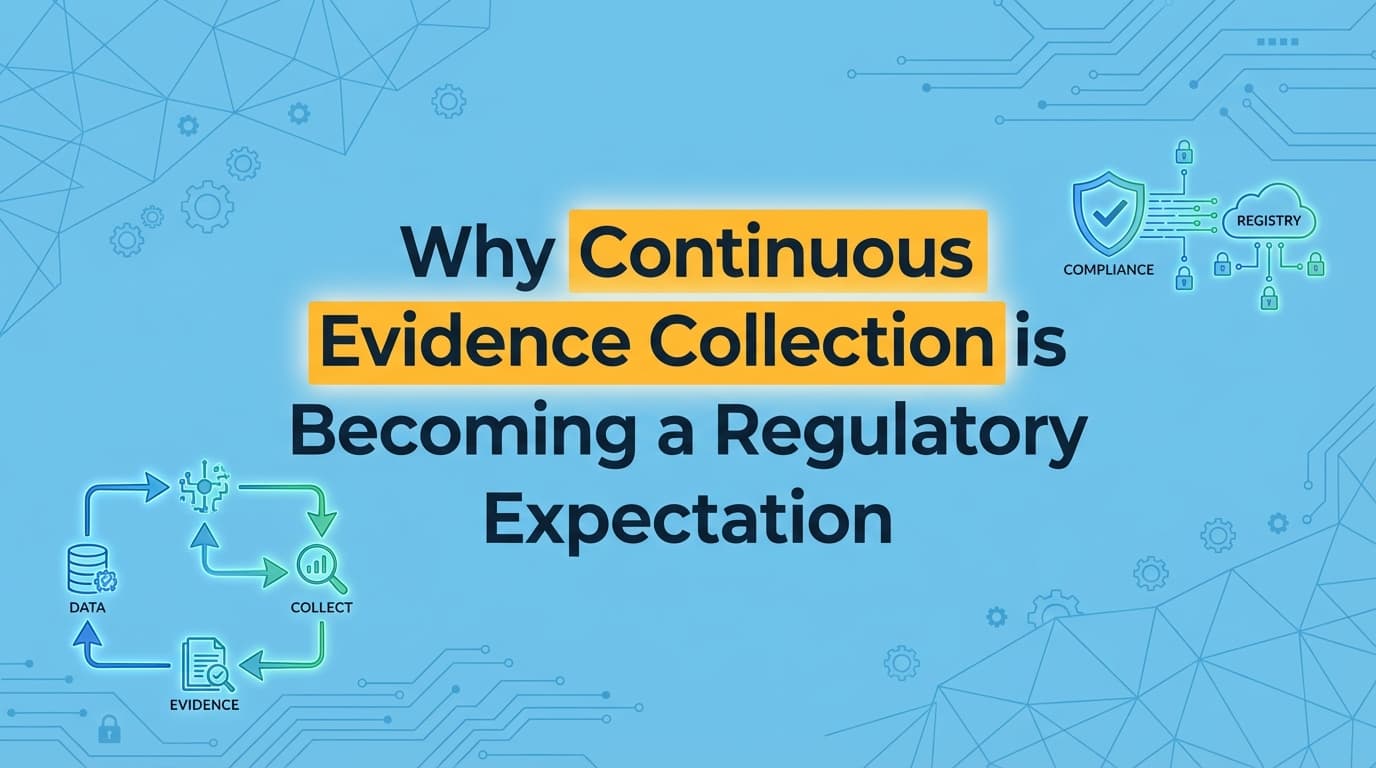
Why Continuous Evidence Collection is Becoming a Regulatory Expectation
Regulatory bodies like the AICPA, SEC, and NIST are shifting from 'point-in-time' audits to continuous monitoring. Continuous evidence collection ensures security controls remain functional 24/7, eliminating the compliance gap caused by rapid digital changes and providing real-time audit readiness.
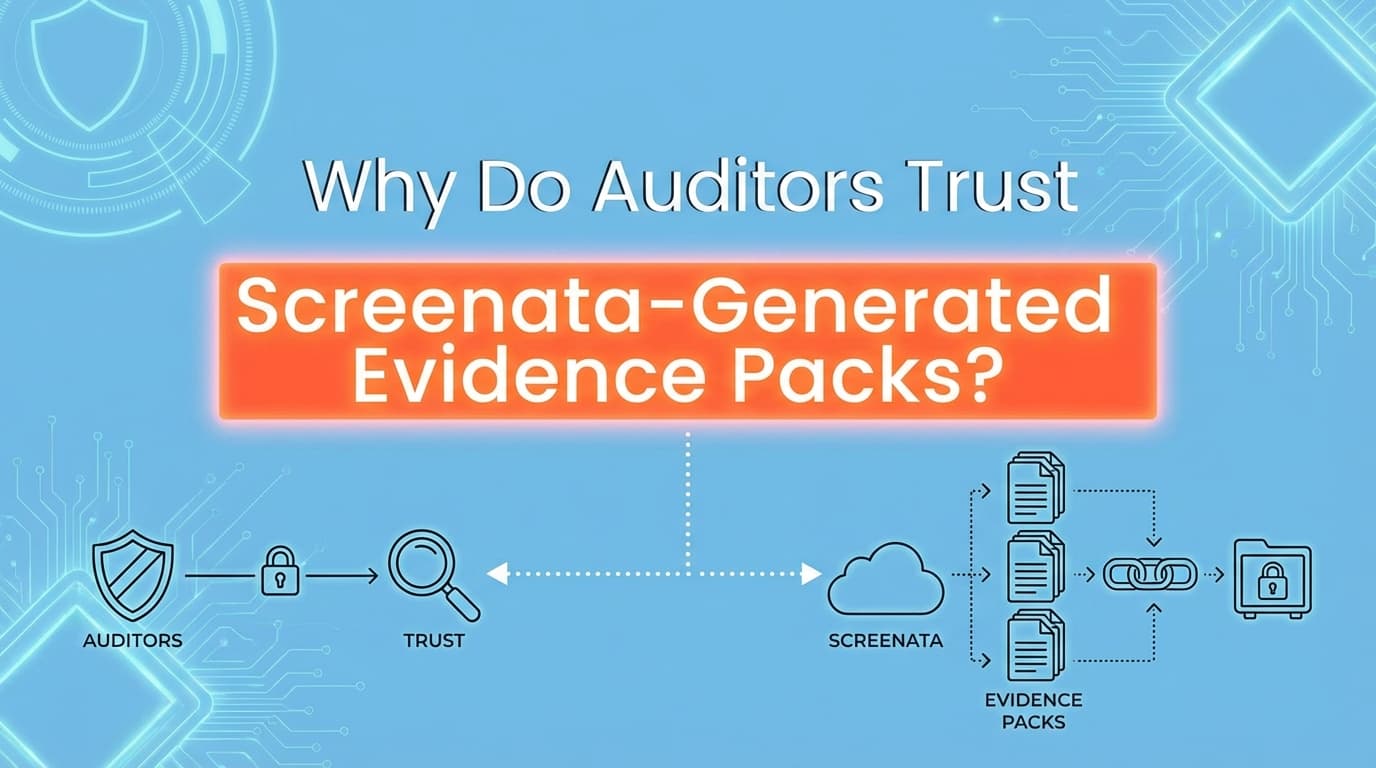
Why Do Auditors Trust Screenata-Generated Evidence Packs?
Auditors trust Screenata-generated evidence packs because they provide verifiable, immutable, and contextual proof of control execution. By combining timestamped screenshots with system metadata, user identity, and professional formatting, Screenata eliminates the risk of human error and evidence tampering common in manual collection.
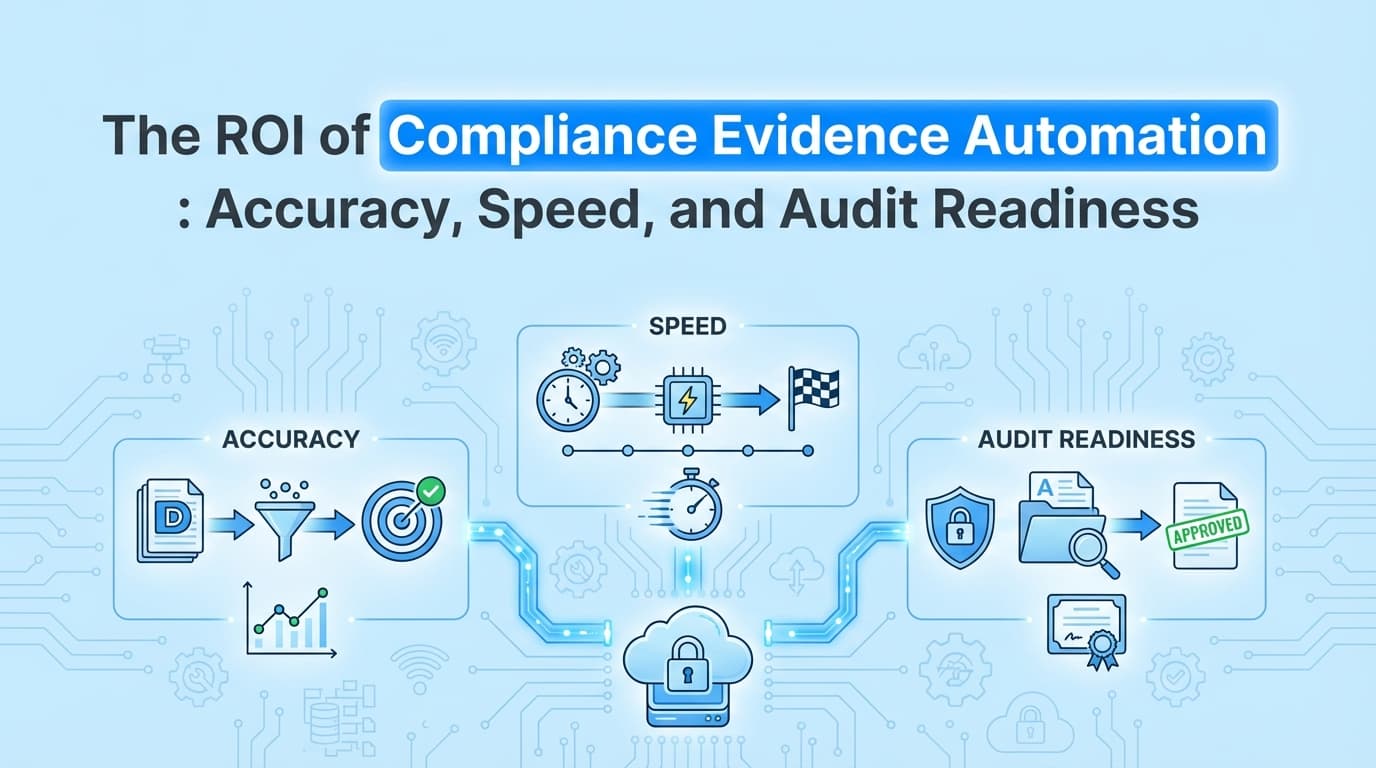
The ROI of Compliance Evidence Automation: Accuracy, Speed, and Audit Readiness
Compliance evidence automation delivers a 90-95% cut in manual effort by running the control test, scoring the capture, chasing attestations, and signing the pack. Screenata's agent Vera turns evidence work into review, giving startups higher accuracy, audit readiness, and a first-year SOC 2 Type II at $22K-$33K with the auditor and team time counted, against $77K-$178K for a platform plus a consultant.