

Blog
Insights on compliance automation.
Guides and articles on automating evidence collection, generating policies from real infrastructure, and getting audit-ready across SOC 2, HIPAA, and ISO 27001.
Why Manual Evidence Collection No Longer Scales for Modern Audits
Manual compliance evidence collection breaks down at scale, consuming 80-120 hours per audit, costing $15k-$30k annually, and creating bottlenecks as companies grow. Here's why automation is no longer optional.
What Makes Screenata a Category-Defining AI Compliance Officer
Screenata defines a new category: an AI Compliance Officer named Vera who runs continuous compliance as an agent. She scans your infrastructure, writes deterministic policies from your real systems, captures the application evidence a dashboard can't, chases attestations in Slack, and signs every artifact. She replaces both the GRC dashboard and the consultant for $22K-$33K in year one to a SOC 2 Type II, with the auditor and your team's time counted.
What Computer-Use-Level Verification Means for Audit Reliability
Computer-use AI enables 99%+ audit reliability by autonomously testing any web interface without APIs. This breakthrough eliminates API integration gaps, reduces false negatives from 15% to <1%, and enables continuous compliance monitoring for legacy systems.
What Is Compliance Evidence Automation (and Why It's Transforming Modern Audits)
Compliance evidence automation is an agent that collects, documents, and signs audit evidence across every source: API scans, application screenshots, and the attestations only a person can answer. Screenata's agent Vera runs it end to end, cutting manual effort by roughly 93% while keeping every artifact traceable and auditor-ready.
Is Drata Enough to Automate SOC 2 Compliance Completely?
No. Drata automates about 80% of SOC 2 through infrastructure APIs, then flags the rest and waits for you. This article explains what Drata automates, the 20% it leaves manual (application screenshots plus the attestations only a person can answer), and how Vera, an agent that runs continuous compliance, closes the gap alongside Drata or in place of the platform-plus-consultant stack.
Will AI Agents Eventually Handle Full Compliance Testing?
Yes. AI agents will handle 80-90% of compliance testing autonomously, executing control tests, generating evidence, and detecting failures. Human oversight shifts from test execution to strategic risk management.
How Screenata Fits Into the Next Generation of Audit Automation
Screenata is an AI Compliance Officer for startups, handling policy writing, codebase analysis, control mapping, evidence collection, and readiness scoring. It's evolving toward autonomous compliance testing with continuous monitoring, predictive compliance, and self-healing workflows.
Can AI Achieve Real-Time Compliance Assurance Across Multiple Standards?
Yes. AI can monitor SOC 2, ISO 27001, HIPAA, and PCI-DSS simultaneously in real-time, providing continuous compliance status instead of quarterly snapshots. This significantly reduces multi-framework audit costs while improving coverage from quarterly snapshots to continuous verification.
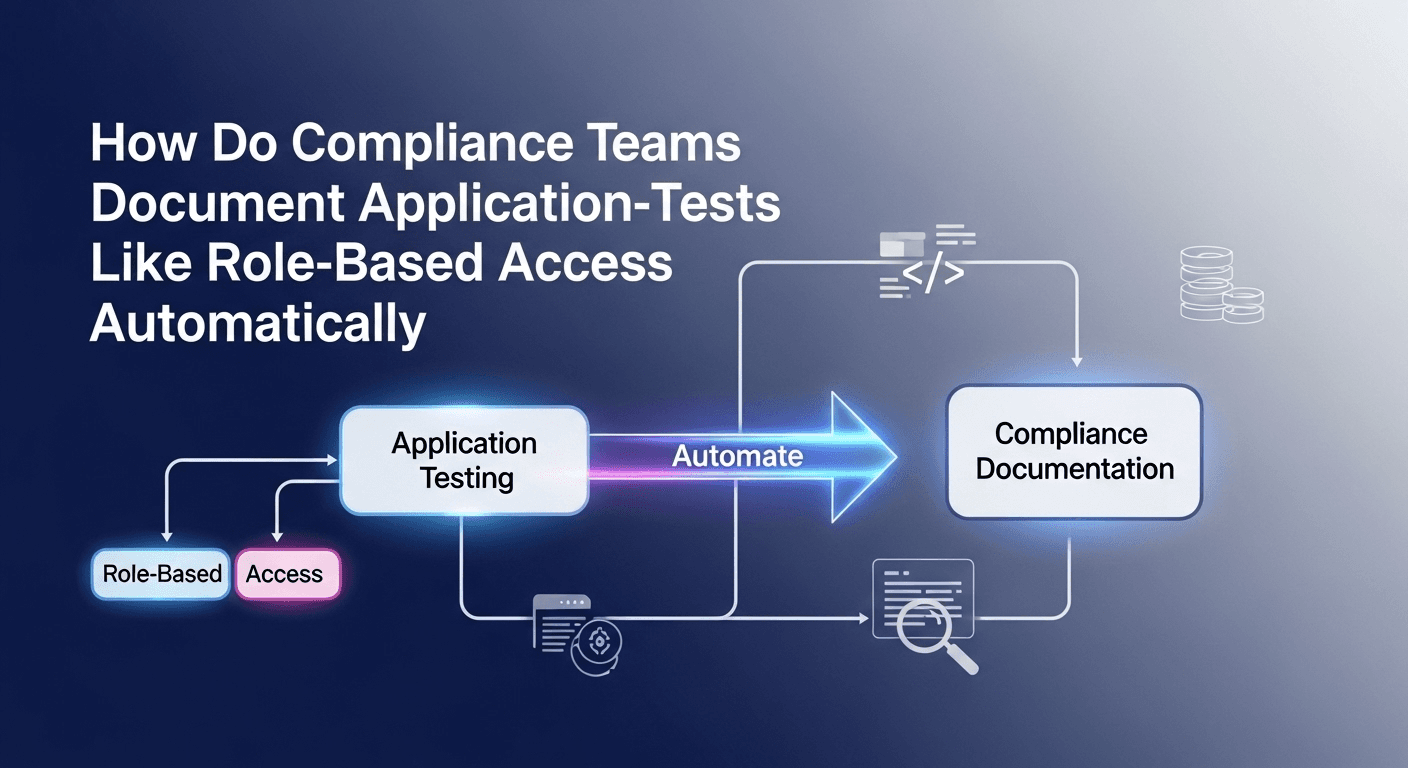
How to Document SOC 2 Application Testing Automatically with Screenshots
Automate SOC 2 application testing documentation by using browser extensions that capture screenshots during RBAC tests, access denial attempts, and workflow validations. This guide shows how to document application-level tests automatically, reducing manual work from 45 minutes to 3 minutes per control.
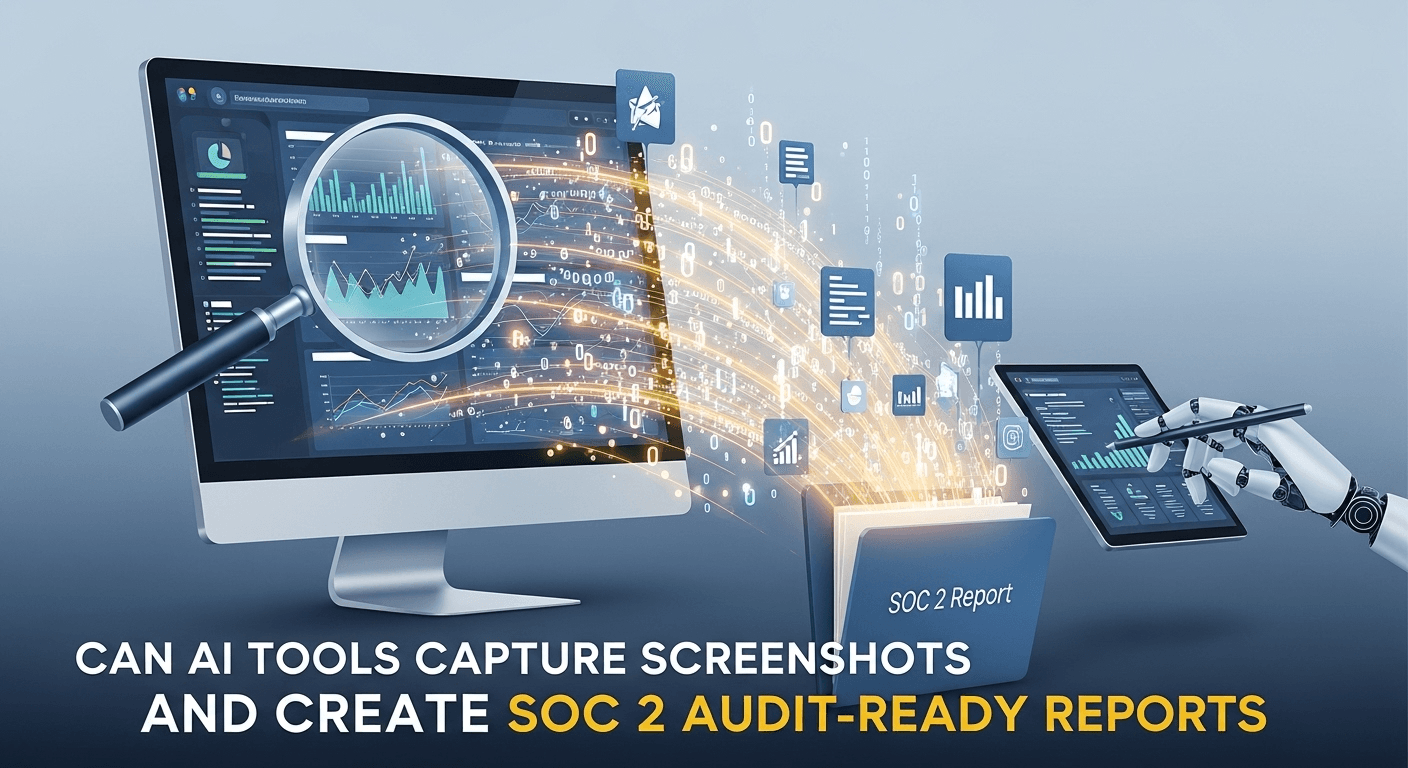
Can AI Capture Screenshots and Generate SOC 2 Audit Reports?
Screenshot capture is one of several ways an AI compliance agent named Vera collects evidence. She captures application screenshots with DOM snapshots and signed timestamps, generates the control narrative, and maps each one to a Trust Services Criterion. Every artifact traces back to a control. This guide covers how it works and what auditors require to accept it.
How AI-Generated Evidence Will Shape Auditor Workflows
AI-generated compliance evidence moves auditor time away from chasing and re-checking screenshots and toward testing and judgment. It does not shorten the observation window, shrink the auditor's samples, or make the audit fee the saving. The saving is on your side: fewer clarification cycles and fewer team hours.
Can Drata or Vanta Capture Screenshots for SOC 2 Evidence?
Partly. Vanta added computer-use screenshot capture in August 2026; Drata has not announced an equivalent. Both automate infrastructure evidence via APIs, and neither reaches your authenticated application UI, workflow documentation, or attestations, because a cloud browser does not carry your session. This article explains what evidence stays manual, why a dashboard can't reach it, and how Vera, an agent that runs continuous compliance, does that work: capturing application evidence, chasing sign-offs, and filing signed, traceable packs.