

Blog
Insights on compliance automation.
Guides and articles on automating evidence collection, generating policies from real infrastructure, and getting audit-ready across SOC 2, HIPAA, and ISO 27001.
Automating the Last Mile of Compliance Evidence: Beyond GRC Tools
GRC platforms automate infrastructure monitoring, but the 'last mile' of compliance, screenshots, UI-based settings, and manual workflows, often remains a manual burden. This guide explains how to automate the final 10% of evidence collection for SOC 2 and ISO 27001 to ensure full audit readiness.
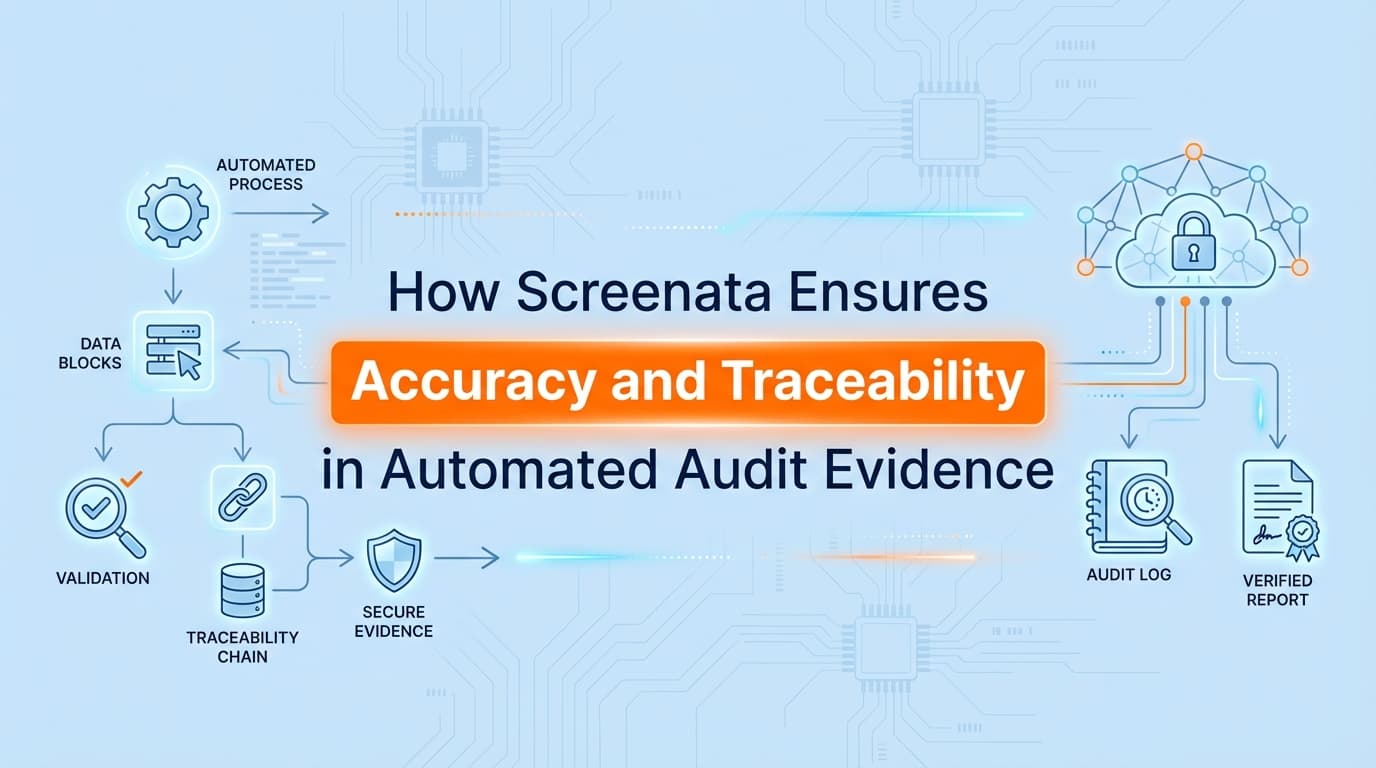
How Screenata Ensures Accuracy and Traceability in Automated Audit Evidence
Auditors require proof that automated evidence hasn't been tampered with. Screenata ensures accuracy and traceability by capturing immutable metadata, cryptographic hashes, and direct source links for every screenshot and log, creating a verifiable chain of custody that exceeds manual reporting standards.
The MSP Guide to Scaling PCI DSS Audits Across Clients with Automation
Managing PCI DSS compliance for multiple clients usually means drowning in spreadsheets and manual screenshots. This guide explains how MSPs can standardize evidence collection, automate Requirement 10 and 11 checks, and scale audit preparation without hiring more staff.
How to Automate Evidence for "Not Monitored" Controls in Drata
Drata's "Not Monitored" controls require manual evidence uploads, creating a bottleneck for SOC 2 and ISO 27001 audits. This guide explains how to automate evidence collection for these custom controls using screenshot automation and the Drata API.
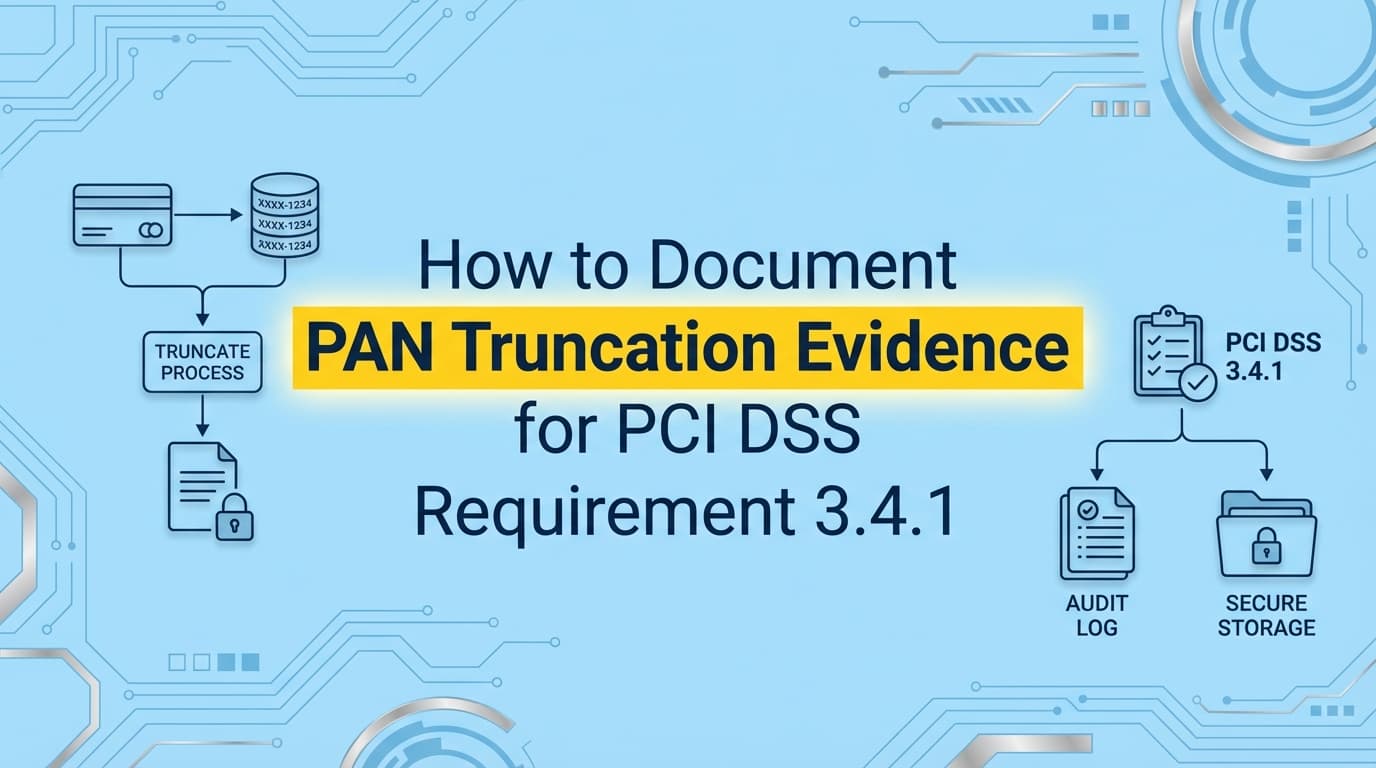
How to Document PAN Truncation Evidence for PCI DSS Requirement 3.4.1
PCI DSS auditors require visual proof that Primary Account Numbers (PAN) are truncated when displayed and stored. This guide explains how to capture database screenshots, API logs, and user interface evidence to satisfy Requirement 3.4.1 (formerly 3.3) without exposing sensitive data.
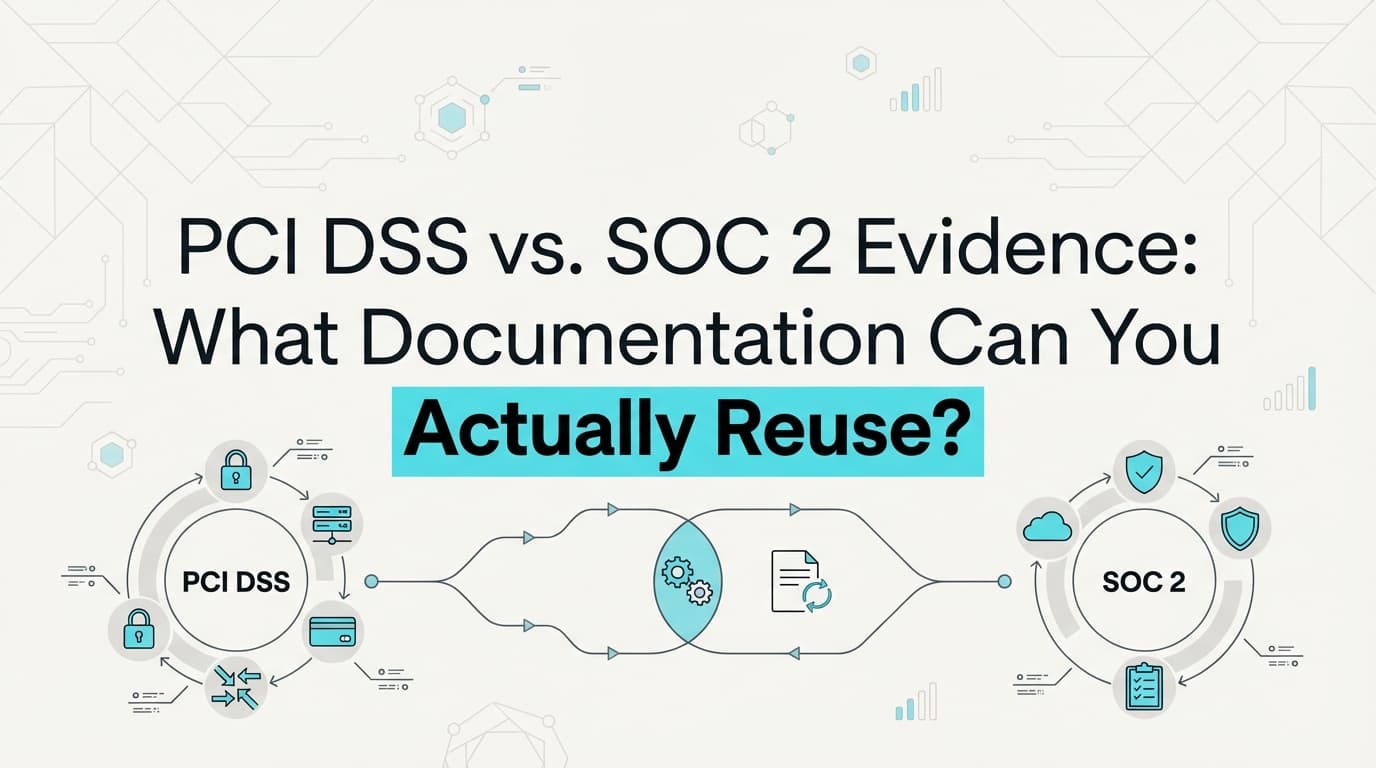
PCI DSS vs. SOC 2 Evidence: What Documentation Can You Actually Reuse?
Yes, you can reuse about 60-70% of your evidence between PCI DSS and SOC 2, but the format matters. This guide maps the evidence overlap for access control, change management, and logging, and explains why a PCI ROC isn't enough for a SOC 2 auditor.
SOC 2 Evidence Library Best Practices: Organizing Documentation for Auditors
A disorganized evidence library leads to IPE failures and extended audit timelines. This guide explains how to structure folders, standardize naming conventions, and automate evidence collection to ensure auditors accept your documentation without pushback.
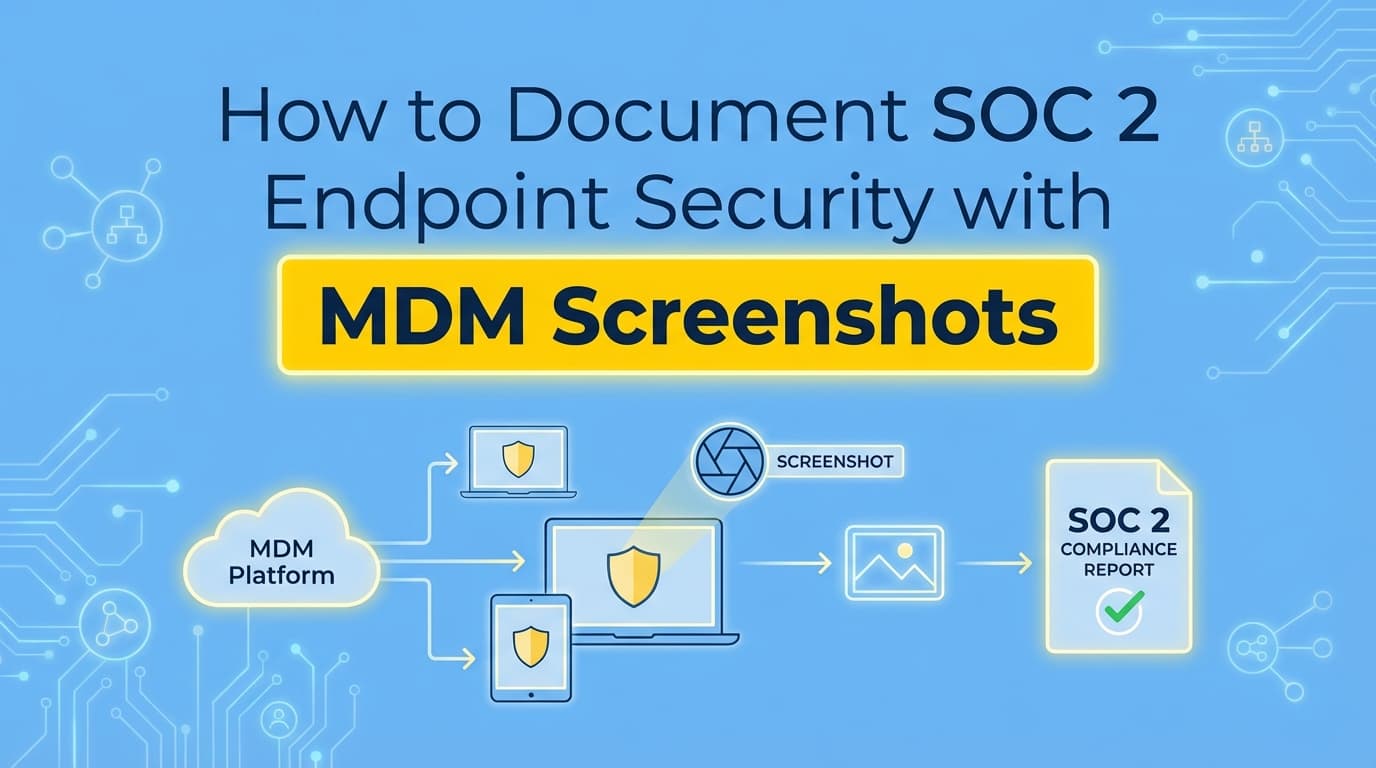
How to Document SOC 2 Endpoint Security with MDM Screenshots
SOC 2 auditors require more than a device list; they need proof that endpoint security policies are configured correctly. This guide explains the specific MDM screenshots required for controls CC6.1 and CC6.8, distinguishing between population evidence and configuration evidence.
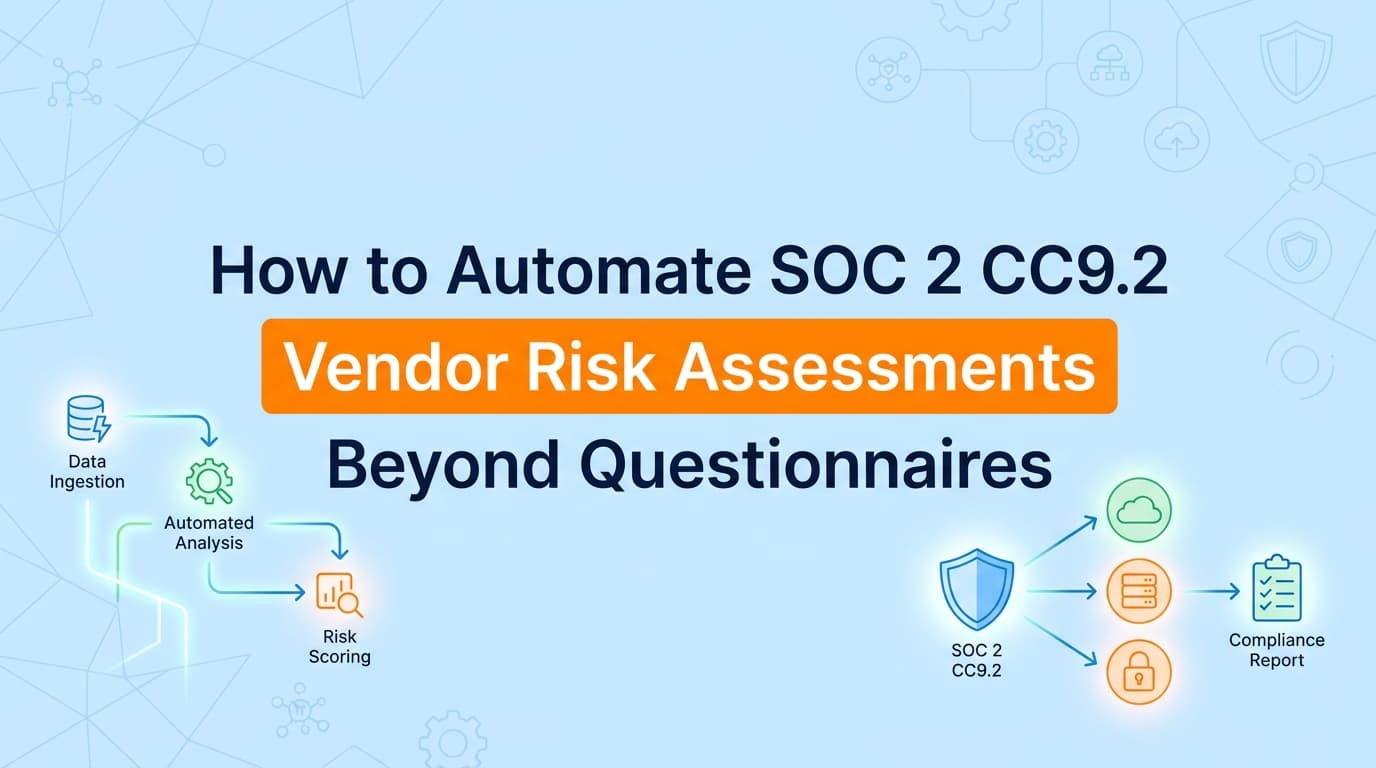
How to Automate SOC 2 CC9.2 Vendor Risk Assessments Beyond Questionnaires
SOC 2 CC9.2 requires more than just collecting vendor reports; it demands proof of review and risk analysis. This guide explains how to automate vendor risk management evidence, including public trust centers and internal review workflows, where traditional GRC questionnaires fall short.
Vendor Security Assessment Checklist: What Enterprise Teams Actually Evaluate
Enterprise security teams look beyond the SOC 2 badge. They evaluate specific controls around data isolation, fourth-party risk, and SDLC security. This guide breaks down the actual checklist procurement teams use to approve or reject vendors.
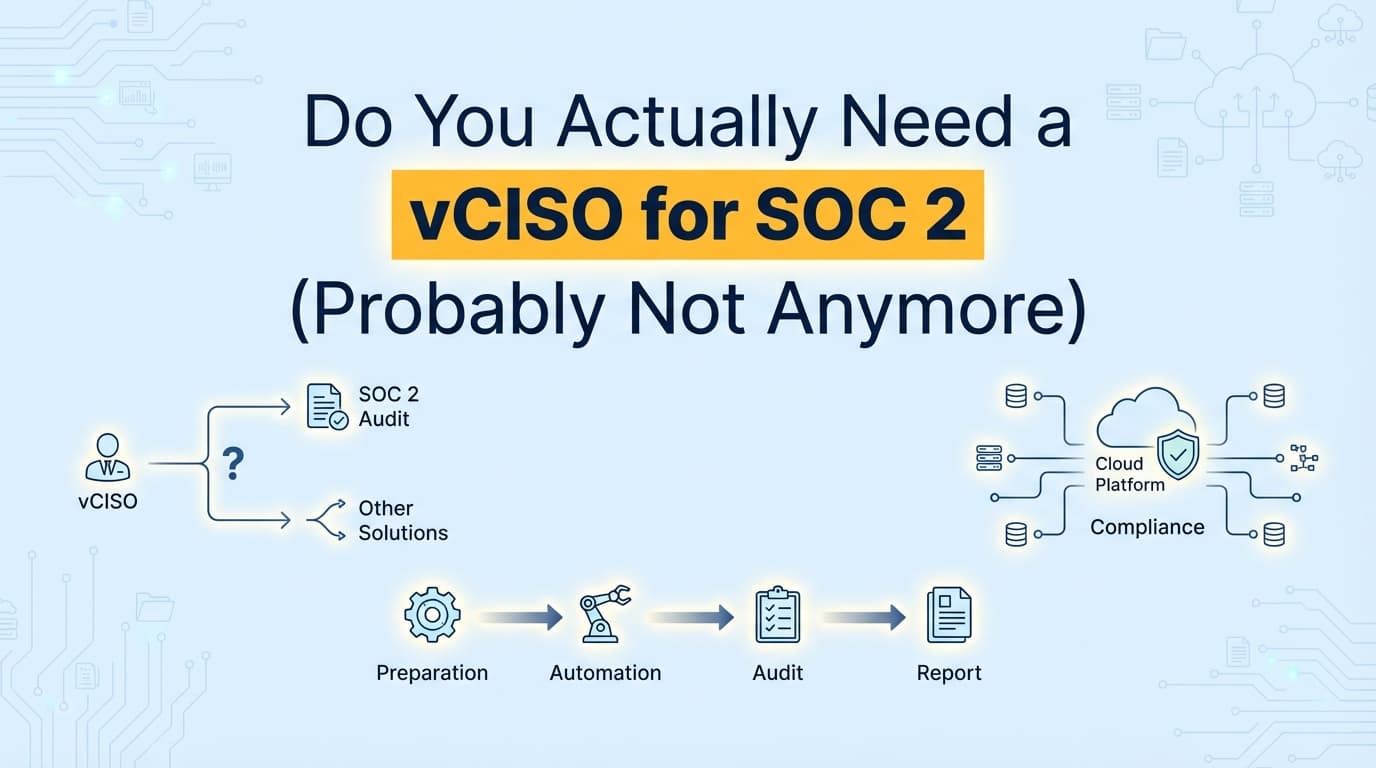
Do You Actually Need a vCISO for SOC 2? (Probably Not Anymore)
For most B2B SaaS companies, no. AI compliance tools now handle scoping, policy writing, evidence collection, and audit prep end-to-end. This guide breaks down which SOC 2 tasks are fully automated and the few scenarios where a human consultant still matters.
SOC 2 for First-Timers: What to Read, What to Skip, and What to Tell Your CEO
Someone just asked you for SOC 2. Before you spend a week Googling, here's the official documentation that actually matters, what you can safely ignore, and a plain-English brief you can hand to management so they understand what they're signing up for.